


Smart heat pumps: where energy efficiency meets intelligent living
In the world of smart homes, energy efficiency is no longer just about choosing the right appliances. It is about how those appliances communicate, learn, and adapt. Lighting systems adjust to daylight, blinds respond to temperature, and energy management systems balance consumption in real time. Heating, however, has long remained one of the most complex pieces of this puzzle.
That is now changing. Smart heat pumps are emerging as one of the most promising tools for homeowners who want comfort, sustainability, and long-term energy control without sacrificing ease of use. But what exactly makes a heat pump “smart”? And why does this matter in a connected home?
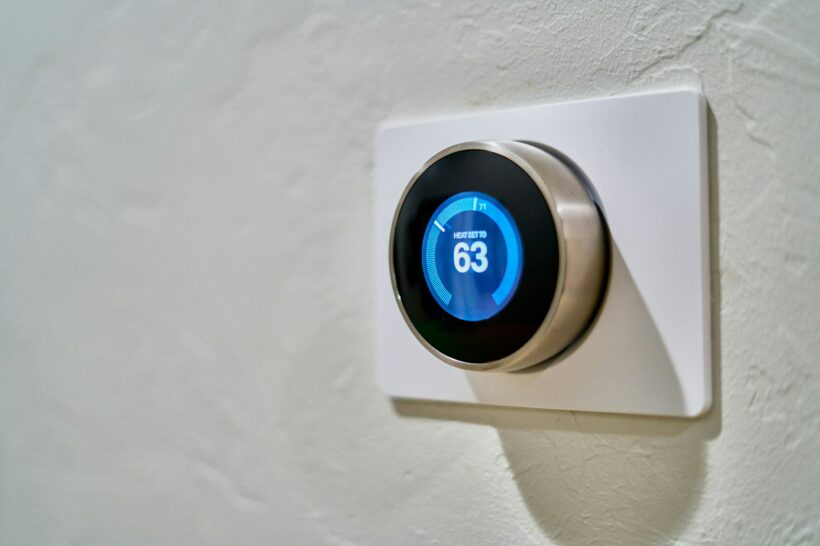
From efficient technology to intelligent system
Heat pumps themselves are not new. They have been praised for years for their ability to extract renewable energy from air, ground, or water and convert it into usable heat. Compared to traditional boilers, they can dramatically reduce carbon emissions and operating costs.
What is new is the way heat pumps are now being controlled. Modern smart heat pumps use advanced algorithms, sensors, and data inputs to continuously optimize their operation. According to research by the Fraunhofer Institute for Solar Energy Systems (ISE), AI-controlled heat pumps can adapt to environmental conditions and significantly improve overall efficiency by using artificial neural networks.
Instead of working with fixed heating curves, these systems analyze outdoor temperature trends, building thermal behavior, user comfort preferences, and even weather forecasts. The result is a heating system that no longer simply reacts, it anticipates.
Why intelligence matters for homeowners
For homeowners, the difference is immediately noticeable. A smart heat pump does not just heat a house; it manages comfort strategically. As we also discussed in our article on home automation ideas to implement in your smart home in 2026, the real value lies in coordination rather than individual devices.
A smart heat pump can slightly preheat a home when renewable energy production is high, reduce output during peak tariffs, and adapt room temperatures based on actual occupancy. The benefit is twofold: lower energy consumption and more stable indoor comfort.
The role of smart meters and energy management
Smart heat pumps reach their full potential when they are not working alone. By connecting to smart meters and home energy management systems, they become part of a much larger ecosystem.
This approach closely aligns with what we previously explored in our article abouttrending smart meters for energy-efficient homes, where data transparency proved to be the foundation for meaningful energy optimization. In practice, a smart heat pump can increase operation when solar energy is available and respond to dynamic tariffs, making heating a flexible, optimizable process.

Smart home integration: beyond stand-alone solutions
Many heat pump manufacturers now offer proprietary apps and cloud platforms. While these are useful, they often remain isolated systems. In a true smart home, heating is just one element of a broader automation environment.
This is where open automation standards become increasingly relevant. Long-term interoperability often proves more valuable than short-term convenience. In professional smart home installations, standards such as KNX are frequently used as a backbone to connect systems like heating, lighting, and shading into one coherent environment.
Unlike wireless solutions that may struggle with the thick walls of a technical room or interference from heavy machinery, a wired backbone ensures that your heat pump receives its efficiency commands without a second of delay. In such setups, a heat pump becomes part of scenes and energy strategies rather than remaining a stand-alone appliance.
Learning systems, long-term value
One of the most interesting aspects of AI-driven heat pumps is their learning capability. Traditional heating systems are configured once and rarely adjusted again. Smart heat pumps continuously refine their behavior, learning how fast a building cools down and how external weather patterns affect indoor comfort.
Choosing future-proof integration strategies becomes just as important as choosing the hardware itself. As we noted in our overview of future-proof upgrades, heating systems are among the most strategic components to modernize early in a renovation process.
Conclusion
The research from Fraunhofer ISE confirms that the future of heat pump technology lies in intelligence and system integration. For homeowners, the message is clear: choosing a smart heat pump is not only about heating your home today — it is about preparing your home for the energy systems of tomorrow. Smart heat pumps are not just efficient; they are becoming intelligent partners in the modern smart home.


