

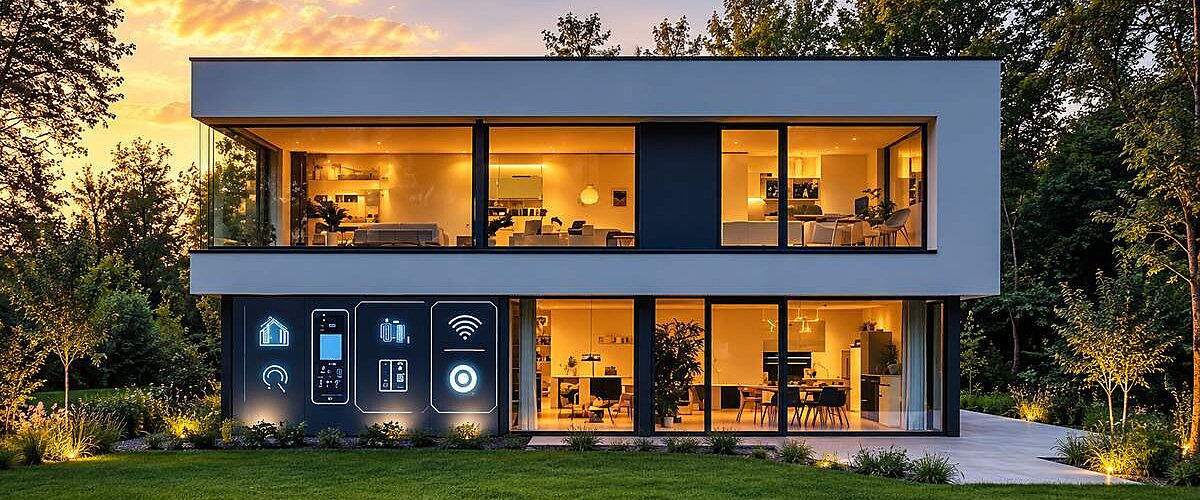
Whole-home energy orchestration: one brain instead of ten apps
Ask most smart home owners how they manage energy, and you'll get a familiar answer: one app for the thermostat, another for the EV charger, a third for the solar inverter, a fourth for the smart plugs monitoring the tumble dryer. Every device is "smart" on its own. None of them are talking to each other. In 2026, the industry has a name for fixing that: energy orchestration — a single layer of intelligence that manages every energy-consuming device in the home at once, instead of leaving each one to optimize in isolation.
Here's how to actually move toward that, step by step.

One brain vs 10 apps
1. Map what's actually drawing power
You can't orchestrate what you can't see. Before adding any new layer of intelligence, list every meaningful energy consumer in your home: heating and cooling, water heating, EV charging, major appliances, lighting, and any local generation or storage (solar panels, a home battery). Most households are surprised by how much sits outside their existing "smart" setup entirely.
2. Put everything on one backbone, not ten networks
The reason app-juggling happens in the first place is that each device shipped with its own ecosystem. Real orchestration needs a common layer underneath all of them — a bus or integration platform, like KNX, that heating, shading, metering, and increasingly EV charging and inverters can all report to and be controlled from. This is the structural difference between "ten smart devices" and "one smart home": one is a pile of independent optimizations, the other is a system that can compare and prioritize between them.
3. Feed it live data
Orchestration is only as good as the information behind it. A smart meter that reports usage in real time, visibility into dynamic or time-of-use electricity tariffs, and — if you generate your own power — live solar production data, all give your system something to actually decide with. Without this, "orchestration" is just a nicer dashboard.
What this looks like on an ordinary Tuesday
Your solar panels are producing more than the house is using around 1pm. Instead of that surplus just flowing back to the grid at a low sell-back rate, the system recognizes the surplus, ramps up EV charging immediately, and queues the water heater to run right behind it. By the time you're home in the evening, the car is charged and the boiler is topped up — both using power that would otherwise have been sold cheaply, not power bought expensively at peak evening rates. That's the entire value of orchestration in one everyday moment: not a single new device, just devices finally being allowed to talk to each other.
4. Set priorities, not schedules
The old way of automating energy was scheduling: run the dishwasher at 11pm, charge the car overnight. The orchestration approach flips this — you define priorities and limits (comfort minimums, a monthly budget ceiling, "always charge the car by 7am") and let the system decide the timing dynamically, shifting flexible loads like EV charging or water heating toward the cheapest or greenest hours as conditions change.
5. Monitor, then refine
The payoff compounds over time. A central dashboard showing where energy actually goes — by room, by device, by hour — lets you spot the next opportunity: an underused zone that's still being heated, an appliance running at the worst possible time, a pattern you didn't know you had. Orchestration isn't a one-time setup; it gets smarter the longer it has data to work with.
Start here, not everywhere
- Check whether your energy supplier offers a dynamic or time-of-use tariff. Orchestration has nothing to shift toward without one.
- List the 2-3 devices in your home that draw the most power and are flexible in timing (EV charger, water heater, dishwasher). These are your highest-value orchestration candidates, start there rather than trying to connect everything at once.