

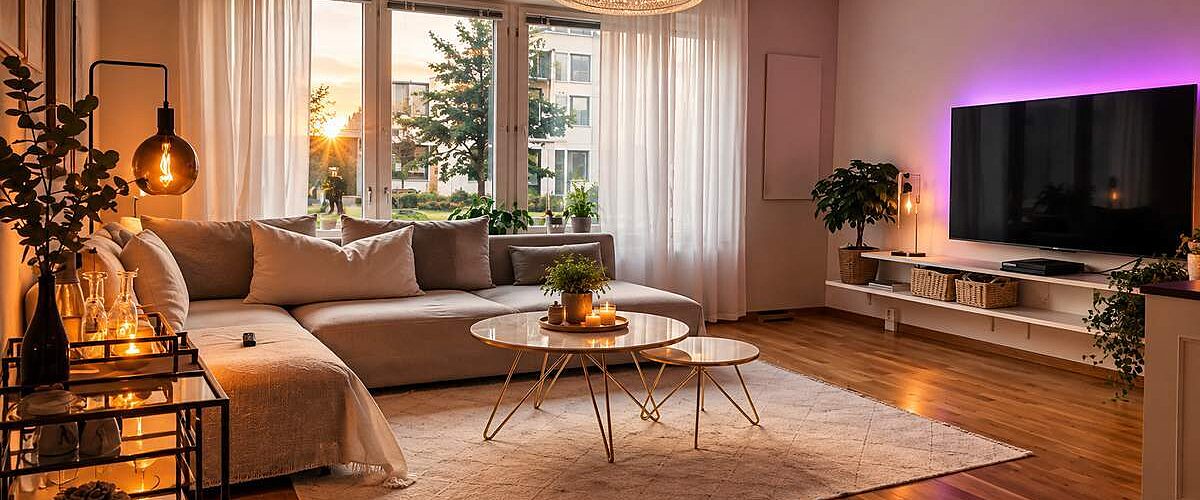
Small space, smart space: automation for apartments and rentals
Smart home content tends to assume you own the walls you're drilling into. Most people don't. Renters and apartment dwellers make up a huge share of European households, and with energy costs still a daily pressure point, the case for automating a rented space is stronger in 2026 than it's ever been — you just need a different playbook.
A realistic first weekend
Picture a two-bedroom rental: a smart radiator valve on the living room and bedroom radiators (installed in minutes, no tools), two plug-in smart bulbs in the spots you actually sit under, and one smart plug on the tumble dryer or an old fridge. That's an afternoon project, costing well under what a single month's energy overspend usually runs — and every part of it comes off the wall when you move.
1. Start wireless and fully reversible
The golden rule for a rental: nothing you install should cost you your deposit or a conversation with your landlord. Battery-powered sensors, plug-in devices, and clip-on hardware let you build real automation without a single new hole in the wall. Wireless variants of professional systems — KNX RF, for instance — bring the reliability of a proper standard to a setup that can be fully removed and taken with you when you move.

2. Target the spend that actually pays back
In a smaller space, the biggest wins are usually the least glamorous: a smart radiator valve on your actual heat source, a smart plug on whichever appliance is the real energy hog (often an old fridge or a tumble dryer), and eliminating standby drain on entertainment systems. Skip the gadgets that look impressive and start with the ones that show up on your bill.
3. Light and shading, first
Nothing changes the feel of a rented space faster — or is easier to undo — than smart lighting and clip-on shading motors. Both can be fully plug-and-play, both travel with you, and both give an outsized boost to comfort relative to the effort of installing them.
4. Keep security tenant-friendly
Battery-powered smart locks that replace only the interior cylinder, and camera doorbells that clip over an existing peephole, let you add real security without permanently modifying the door your landlord owns. Always check your lease before anything that touches the building's fixtures.

5. Think in systems, not gadgets — even at a small scale
The easiest trap in a rental is buying disconnected devices simply because they're "smart." Better to pick a wireless standard you can build on: a couple of sensors today, a few more when you move, and — if you ever end up owning a home — the option to extend that same standard into a full wired backbone rather than starting from zero. A wireless KNX setup today keeps that door open in a way that closed consumer ecosystems don't.
One thing renters and homeowners both need
Whatever you install, it lives or dies by your home network. A router alone struggles well past 20–25 wireless devices before performance suffers — worth knowing before you fill an apartment with plug-in sensors.
What to actually do this week
- Walk through your home and note which single appliance is probably your biggest hidden energy cost (usually the oldest fridge, freezer, or dryer) — that's where your first smart plug goes, not wherever's easiest to reach.
- Photograph your current light switches and thermostat before changing anything — it makes reverting to the original setup at move-out trivial.
The takeaway
Renting isn't a reason to wait on automation — it's a reason to be deliberate about what you install and how easily it comes back out. Done well, a rented smart home isn't a compromise version of the real thing. It's just the early stage of one.