

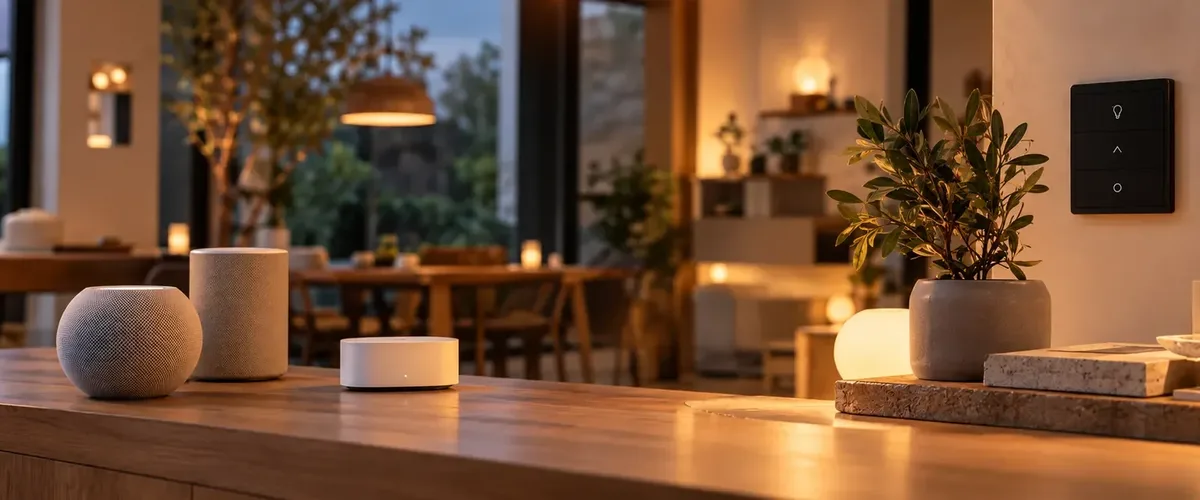
Matter in 2026: has universal compatibility finally arrived?
When Matter's first version shipped in October 2022, the promise was simple to state and hard to deliver: one standard, backed by Amazon, Apple, Google, and Samsung among others, that would let any certified device work with any ecosystem. Four years and several version updates in, it's a fair question to ask directly: has it actually happened?
The honest answer is: real progress, genuine gaps still.
What actually improved
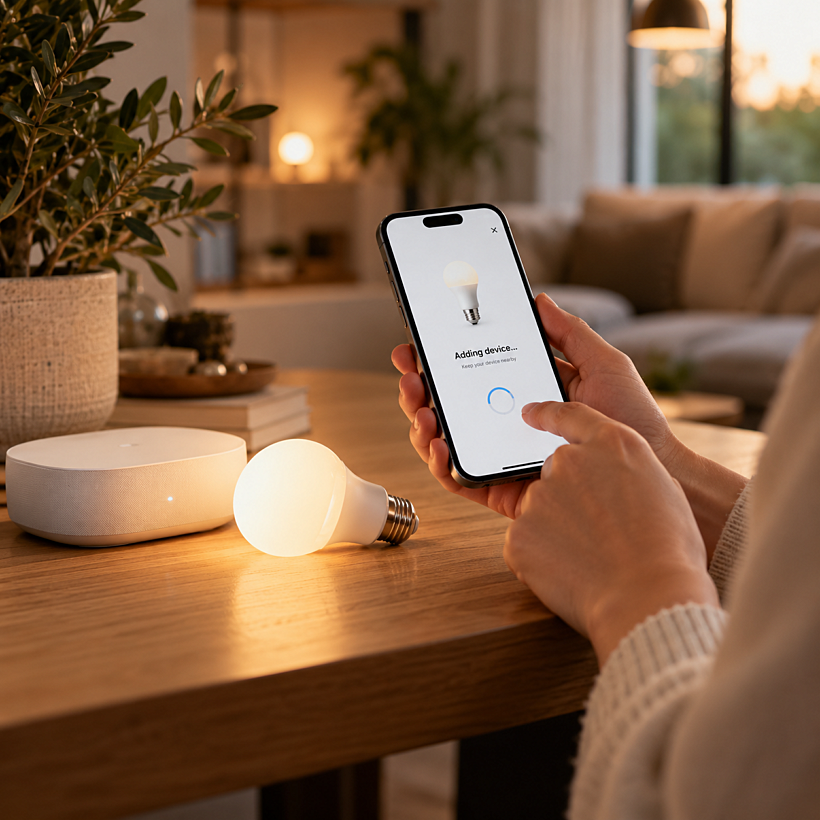
Matter 1.6, released in June 2026, addressed several of the standard's most concrete, practical complaints. Devices can now be commissioned over NFC before they're even installed, solving the awkward problem of a QR code becoming inaccessible once a bulb is screwed in or a sensor is mounted. “Joint Fabric” now allows multiple user-authorised controllers to jointly administer a single Matter network, a real fix for households or professionally managed properties juggling more than one ecosystem. A new feature called “Thermostat Suggestions” lets a thermostat weigh a time-bound suggestion from an app against your own stated preferences, rather than simply obeying whichever app spoke last. None of this is nothing.
Where it's still falling short
At the same time, independent testing and reporting through 2026 keeps surfacing the same underlying problem: fragmentation didn't disappear; it moved. A device might support the latest Matter specification, while the ecosystem you've paired it with, such as Google Home, Amazon Alexa, or another platform, still only fully supports an older version, leaving newer features unavailable regardless of what the device itself is capable of.
Manufacturer-specific features are still commonly the casualty of going through Matter at all: advanced lighting effects from brands like Nanoleaf or Govee, for instance, are widely reported to work fully only in their native apps, reverting to basic on/off and brightness once bridged through Matter into a different ecosystem. Turning on a group of Matter light bulbs together has also visibly staggered rather than switched on in sync, a problem nicknamed the “popcorn effect” that older protocols solved years ago. A fix called “Groupcast” was finalized in a follow-up update, Matter 1.6.1, in September 2026, so this should genuinely improve. But a spec update isn't the same as it working everywhere immediately: expect the usual lag before individual devices and platforms actually adopt it, the same gap that's affected every other Matter feature so far. And how consistently a given platform actually implements the specification still varies enough between Apple, Google, and Amazon that identical claims of “Matter support” can mean noticeably different things in practice.

What KNX's own position is, stated plainly
KNX Association has published its own formal position on this, and it's worth stating plainly rather than paraphrasing away: Matter is a good option for making simple connections at an entry level, and can meaningfully extend a KNX installation with additional consumer devices like TVs, streaming devices, smart bulbs, or sockets. But the same position paper is direct about where it stops: Matter allows only partial connectivity between devices from different brands, lacks a common commissioning tool, and scalability may become a limitation as a network grows, in contrast to what KNX describes as full interoperability across more than 8,000 certified devices from over 500 KNX Members. It's KNX's own stated position, not a neutral third-party judgement, but it's also one that lines up closely with what independent tech reporting is separately finding about fragmentation in practice.
What this actually means for your home in 2026
- For anything safety- or comfort-critical, such as heating, blinds, security, or core lighting circuits, a structured system is still the more dependable choice. Matter's remaining gaps are exactly the kind you don't want surfacing in something that controls your front door lock.
- Matter is a genuinely reasonable layer for peripheral consumer devices, such as a smart speaker, a streaming device, or a set of accent lights, bridged in as a convenience rather than treated as your home's backbone.
- If you already own a scattered set of Matter devices, don't assume 1.6 fixes everything overnight. Check what specification version your specific devices and platform actually support before expecting them to behave consistently together.
- Ask your installer whether a KNX-Matter bridge makes sense for your specific consumer devices. That hybrid approach, a KNX foundation with Matter extending it at the edges, is closer to how the standard is actually being used successfully in 2026 than either “all KNX” or “all Matter.”
Universal compatibility hasn't arrived in 2026. What's arrived instead is a materially better, still incomplete version of Matter, one that's genuinely more useful as a complement to a structured system than it was a year ago, but still isn't the single-standard endpoint its original promise implied.