


From reactive to predictive: what “agentic AI” actually means for your home in 2026
Smart home AI has mostly meant one thing so far: prediction. A thermostat that learns your schedule, lighting that anticipates dusk, a system that notices you're usually asleep by 11 pm and dims accordingly. That's genuinely useful, and it's what most “AI-powered smart home” coverage, including our own, has focused on until now.
“Agentic AI” describes something different, and the distinction is worth being precise about, because the term gets used loosely.
Predicting is not the same as acting
A predictive system anticipates and adjusts within boundaries someone else set. An agentic system is given a goal and works out the steps to reach it, potentially across several devices or services, without a human confirming each one.
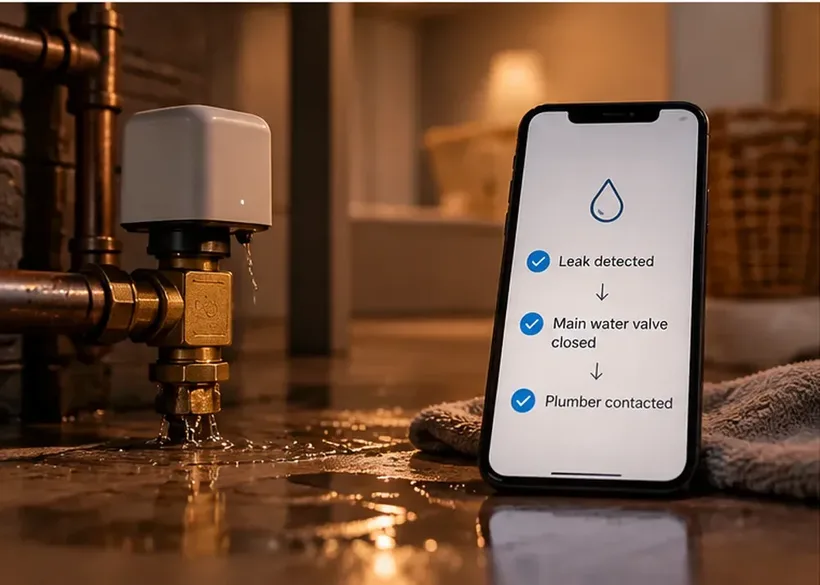
The commonly cited example is a leak: a predictive system tells you there's a leak. An agentic system decides that shutting off the main water valve is the right response, does it, and then goes a step further, contacting a plumber, without waiting for you to act on the alert yourself. The shift is from “here's what I noticed” to “here's what I decided to do about it.”
That's a meaningfully bigger ask of a system than dimming a light on schedule, because it means giving software actual authority over water valves, locks, heating, or alarms.
Where this genuinely stands right now
It's worth being honest about the state of this in 2026: it's early. Most mainstream smart home platforms are still predominantly rule-based or, at best, predictive in the way described above. Genuinely autonomous, multi-step agentic behaviour (the kind that spans multiple devices and takes real-world action on your behalf) exists mostly at the leading edge, not as a default feature you'll find shipped in a mainstream hub today. Treat any product marketed as having already “solved” this with some scepticism.
Why the foundation underneath matters more than the AI itself
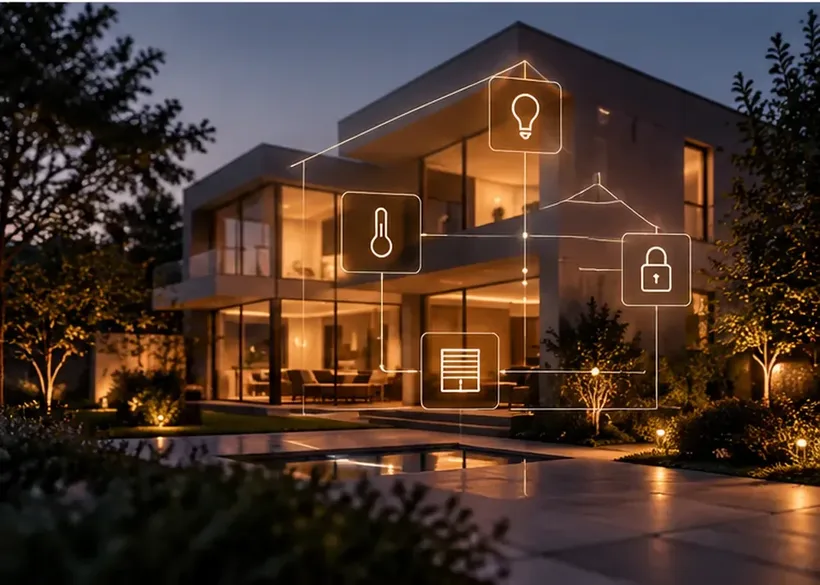
Here's the part that gets skipped in most coverage of this trend: an AI agent is only as trustworthy as the system it's acting on. Giving software the authority to shut a valve or unlock a door is a very different proposition on a fragmented pile of disconnected apps and cloud accounts than it is on a single, structured system where every device has a clearly defined address, a defined function, and encrypted communication.
That's not a hypothetical concern for KNX specifically. It's the actual argument for why an open, standardised backbone matters more, not less, as this trend develops. An agent reasoning over a KNX installation is reasoning over a known, secured, consistently structured map of the home, rather than guessing at what a mismatched set of consumer gadgets will actually do when instructed.
KNX Association itself is investing in this direction rather than waiting to see what happens: its AI Program (2025–2028), which followed on from its earlier IoT Program (2022–2025), exists specifically to support startups building AI-native solutions on top of the KNX ecosystem, not simply bolting AI onto existing products. It's an early signal of where the ecosystem may be heading, even if the resulting products aren't on shelves, or certified, yet.
What this actually means for your home in 2026
- Don't buy into “autonomous home” marketing at face value. If a product claims fully agentic control today, ask specifically what it decides on its own versus what it merely suggests. The distinction matters.
- You don't need to do anything special to “prepare” for this, beyond what's already good practice: a properly documented, well-structured KNX installation with clear naming and group addressing is exactly the foundation any future agentic layer would need. If you're building or expanding a system now, that discipline is the actual preparation.
- Ask your installer what's realistic today. Monitoring, alerting, and predictive comfort adjustments are mature and available now. Autonomous multi-step action across systems largely isn't yet, and anyone promising otherwise should be able to show you exactly what it does.
- Watch the KNX AI Program, not just product marketing, for a more grounded read on where certified agentic capabilities are actually headed over the next few years.
The honest version of this trend isn't “your home will think for itself in 2026.” It's that the industry is starting to build toward systems capable of that, and the homes best positioned to benefit are the ones with a structured, open foundation already in place, not the ones that bought the flashiest single gadget first.